Continuous Integration
Continuous integration (CI) is an Agile and DevOps best practice that involves developers integrating their code changes frequently to the main branch or code repository. The primary objective is to minimize the risk of encountering “integration hell” by avoiding the need to wait for the completion of a project, cycle, or sprint to merge the work of all developers. CI automation facilitates the meeting of business requirements, enhances code quality, and bolsters security.
One of the key advantages of adopting CI is the time savings it offers during the development cycle. By promptly identifying and resolving conflicts, CI helps developers avoid the time-consuming process of fixing bugs and regressions. Additionally, it emphasizes the importance of having a comprehensive test suite, leading to a better understanding of the codebase and the features being developed for customers.
Agile
Agile (opens in a new tab) development is an iterative approach to software development that emphasizes flexibility, collaboration, and customer feedback. In the context of continuous integration (CI), Agile’s principles align seamlessly to promote rapid and reliable software delivery. CI involves frequently integrating code changes into a shared repository, allowing for early detection of issues through automated testing. This practice supports Agile’s goal of maintaining a steady pace of development by ensuring that small, incremental updates are tested and validated promptly.
By integrating code often and receiving quick feedback, development teams can adapt swiftly to changes, reduce integration challenges, and maintain high code quality throughout the project lifecycle. This synergy between Agile and CI helps teams deliver functional software efficiently and respond to evolving requirements with confidence.
DevOps
DevOps (opens in a new tab) embodies a blend of cultural philosophies, practices, and tools that enhance an organization’s ability to deliver applications and services at high speed. This approach allows for the rapid evolution and improvement of products, outpacing the capabilities of traditional software development and infrastructure management methods.
Continuous delivery refers to the automation of software delivery processes to production, ensuring that code changes are consistently and reliably released. Continuous deployment takes this a step further by automatically deploying every change that successfully passes automated tests directly into production.
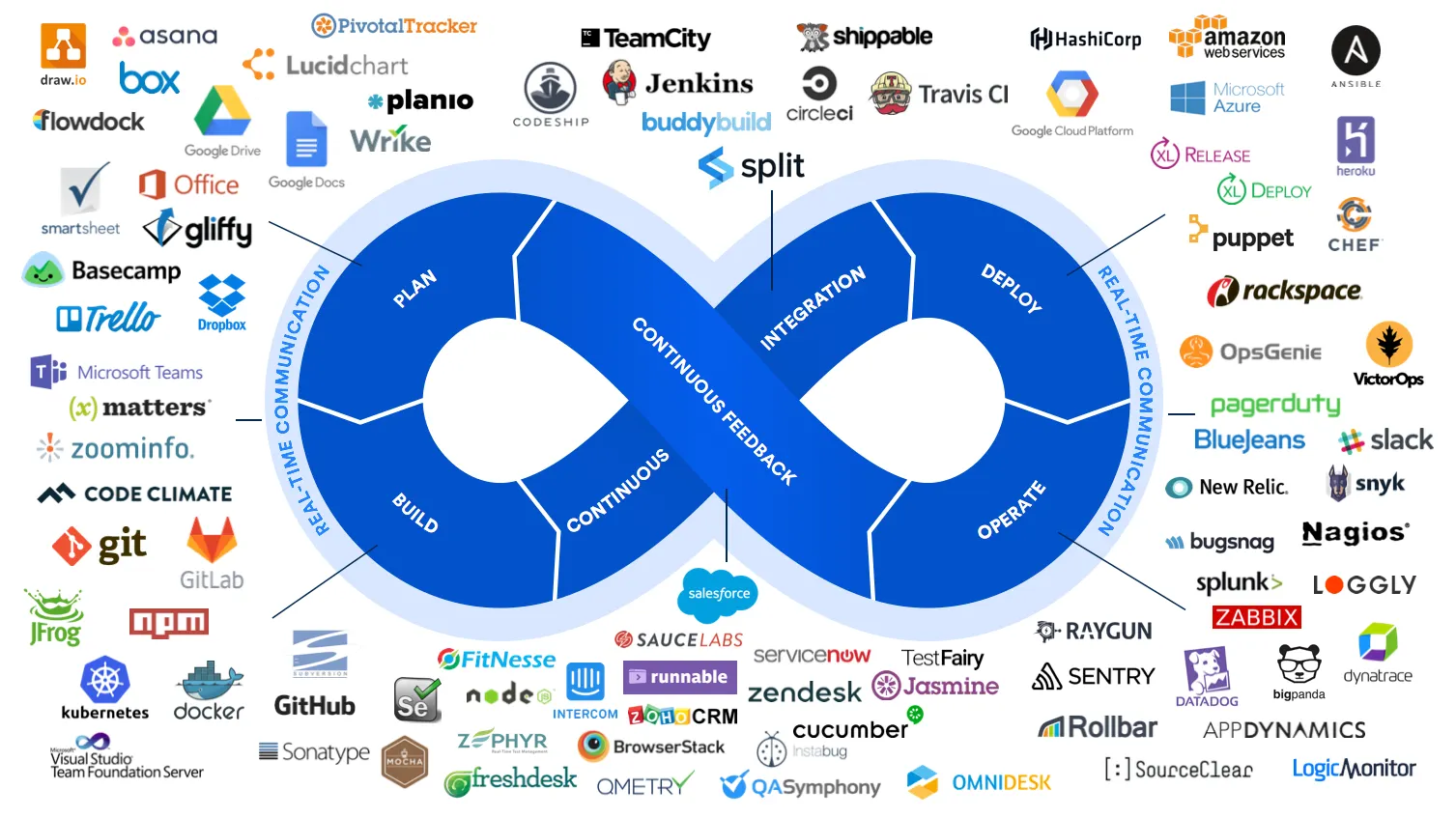
Modern DevOps practices encompass continuous development, testing, integration, delivery, deployment, as well as ongoing monitoring and feedback throughout the software development life cycle. The CI/CD pipeline is the foundation of these operations, enabling seamless and efficient software development and deployment processes.
Resources
-
What is DevOps? (opens in a new tab), What is DevOps? (opens in a new tab)
-
CI/CD (opens in a new tab), What is CI/CD? (opens in a new tab)
-
A comprehensive guide to DevOps essential tools and frameworks (Part 1) (opens in a new tab), (Part 2) (opens in a new tab), (Part 3) (opens in a new tab), (Part 4) (opens in a new tab), (Part 5) (opens in a new tab)
-
Continuous integration (opens in a new tab), Continuous delivery (opens in a new tab), CI/CD (opens in a new tab), Agile (opens in a new tab), DevOps (opens in a new tab)